

BDSM, Dungeon, Home, Sex Swing, Shibari, Tetruss, Tetruss Maxximus, Tetruss Owners, Uncategorized
Shibari Fitness Suspension Drills: Progressive Training for Core Strength and Flexibility
Jan
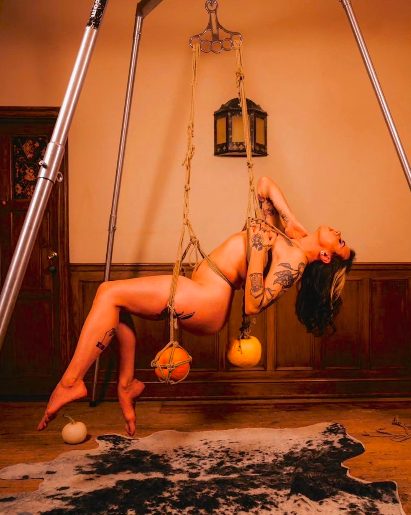
Shibari fitness suspension drills integrate rope bondage techniques with progressive elevation to develop targeted physical conditioning. These drills leverage bodyweight resistance against gravity in overhead setups, emphasizing core engagement, muscular endurance, and range of motion. Compact portable frames like Tetruss rigs enable controlled, incremental progression in home or travel environments, making advanced aerial elements accessible without fixed installations.
Core activation dominates Shibari fitness suspension drills. In partial suspensions — such as hip harness lifts or chest harness partials — the core stabilizes the torso against rotational forces and load shifts. Full inversions or face-down suspensions demand sustained isometric holds from transverse abdominis, obliques, and multifidus muscles, similar to aerial yoga inversions but with added rope friction and tension points. Practitioners report enhanced deep stabilizer recruitment, leading to improved posture and reduced lower back vulnerability during daily activities.
Flexibility gains occur through controlled stretching under load. Progressive drills start with floor-based ties incorporating dynamic stretches — like forward folds in TK positions — then transition to low-height partial suspensions that open hip flexors and shoulders. As elevation increases, gravity-assisted poses extend hamstrings, adductors, and thoracic spine. Rope placement creates passive traction, decompressing joints while encouraging active lengthening, akin to assisted aerial silks work but with precise anatomical targeting.
Build progression systematically for safety and efficacy:
Level 1: Grounded harness drills with resistance pulls to activate core and build grip endurance.
Level 2: Partial suspensions (e.g., seated or kneeling with uplines) for 5-10 minutes, focusing on balance and micro-adjustments.
Level 3: Dynamic transitions — floor-to-partial-to-full — incorporating leg lifts or rotations to challenge coordination.
Level 4: Sustained full suspensions with timed holds, adding controlled swings for proprioceptive training.
Always incorporate warm-ups (yoga flows or light calisthenics) and monitor for fatigue, numbness, or pain.
Tetruss portable, compact frames support this progression by offering adjustable heights, quick reconfigurations, and stable anchoring. Unlike aerial hammocks, Tetruss rigs distribute load via multiple attachment points, reducing single-point stress while allowing rope-specific modifications. Use natural fiber ropes for grip during holds, and integrate breathing cues to maintain relaxation under tension. Tetruss accessories are also handy for these types of set ups.
Risks include overuse strain, nerve pressure from prolonged ties, or circulatory compromise in elevated positions. Mitigate with timed limits (start under 15 minutes total suspension), frequent checks, redundant safety lines, and thorough aftercare involving gentle stretching and recovery. Pair drills with complementary practices like Pilates for antagonist muscle balance.
Shibari fitness suspension drills transform erotic practice into functional training, yielding measurable improvements in core power, joint mobility, and body control. Many practitioners note crossover benefits to other athletic pursuits.
Incorporate these drills into your routine with gear built for precision and reliability. Tetruss portable frames provide the foundation — browse models suited for progressive suspension training at tetruss.com.
Image credits: Tetruss Maxximus. Rigging_Pic @jasonmphotography Model_ @leg_queen
