

BDSM, Dungeon, Home, Sex Swing, Shibari, Tetruss, Tetruss Maxximus, Tetruss Owners, Uncategorized
Mastering Shibari Floor to Suspension Transitions: Fluid Sequences with Compact Portable Frames
Jan
Shibari floor to suspension transitions represent a core progression in rope bondage, shifting from grounded floorwork to elevated aerial play. These sequences build trust, technical precision, and sensory intensity by gradually introducing gravity while maintaining control. Compact portable frames, such as Tetruss rigs, enable these transitions in space-limited environments like apartments or travel setups, offering various height options and stable anchoring without permanent fixtures.
Safety forms the foundation of shibari floor to suspension transitions. Always prioritize nerve-safe ties, circulation checks every 5-10 minutes, and redundant uplines. Use quick-release mechanisms and spotters for initial attempts. Consent must include explicit boundaries for elevation, pain thresholds, and emergency signals. Avoid transitions if the bottom experiences dizziness, fatigue, or prior injuries. Portable frames like Tetruss rigs must support dynamic loads exceeding participant weight plus rope tension — verify ratings for Tetruss and any other rig for setup stability on level surfaces.
Start with partial transitions. Begin on the floor with a secure TK (takate kote) or box tie, incorporating hip harness elements for load distribution. Attach initial uplines to the compact frame at low height, allowing the bottom to remain partially grounded. Use friction locks or muels to adjust tension gradually, lifting limbs or torso incrementally. This builds acclimation to off-floor pressure while testing balance and rope integrity.
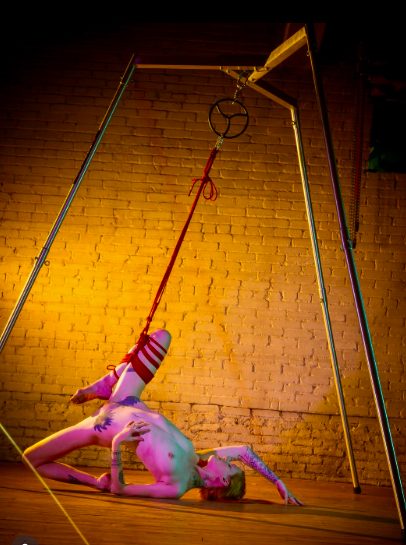
Advance to full sequences. A fluid example: Secure a single-column tie on wrists, transition to a chest harness, then incorporate futomomo (thigh-to-ankle) ties. From a seated or kneeling floor position, attach multiple uplines to the frame’s top ring. Pull evenly to elevate hips first, creating a semi-suspension bridge. Rotate the body into side or face-up positions using controlled pulls and body handling. Compact frames facilitate quick adjustments, enabling seamless shifts between partial and full elevation without repositioning the entire rig.
Incorporate dynamic elements for engagement. Add controlled drops or swings once stable, using the frame’s portability to experiment with angles. Alternate tension and release to induce endorphin responses. Integrate floor-to-air flows like agura-inspired sequences, where crossed legs transition upward via progressive lifts. These movements emphasize mindfulness, requiring constant communication and micro-adjustments.
Portable frames excel here due to modularity — easy height tweaks support varied body types and sequence complexity. Unlike fixed points, they allow rapid setup/teardown, ideal for spontaneous or multi-location play. Pair with 6-8mm jute or hemp for grip during transitions, ensuring frictions hold under load shifts.
Risks include sudden slips if uplines fail or uneven pulls cause torque. Mitigate with double-checks, padded contact points, and post-session aftercare involving decompression, hydration, and emotional check-ins.
Shibari floor to suspension transitions deepen connection through shared vulnerability and mastery. Practitioners describe heightened presence and intimacy from the gradual surrender to gravity.
Elevate your practice with a reliable compact frame. Tetruss portable rigs deliver the stability and versatility needed for these sequences — explore options now at tetruss.com!
Image credits: Captivating image of partial suspension on the Tetruss Maxximus Rigging_Pic_ JasonMPhoto , Model – anonymous
